Set of Decorative Elements. Vector Review
As a designer who has spent years navigating the fine line between digital art and physical stitching, I approach every new machine embroidery design with a critical eye. The gap between what looks good on a screen and what translates well onto fabric is where many projects fail. When I first opened the Set of Decorative Elements. Vector, my immediate goal was to determine if these forty distinct pieces could survive the transition from vector graphics to tangible thread. This collection promises versatility for cards, stickers, signs, banners, logos, t-shirts, and wall art, but in the world of embroidery, "versatility" often comes with caveats regarding stitch density and fabric texture.
The First Impression: Versatility Meets Detail
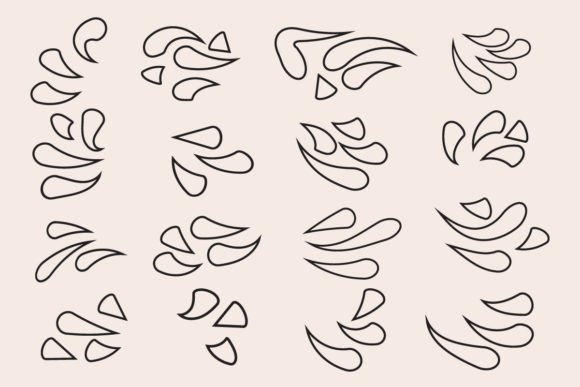
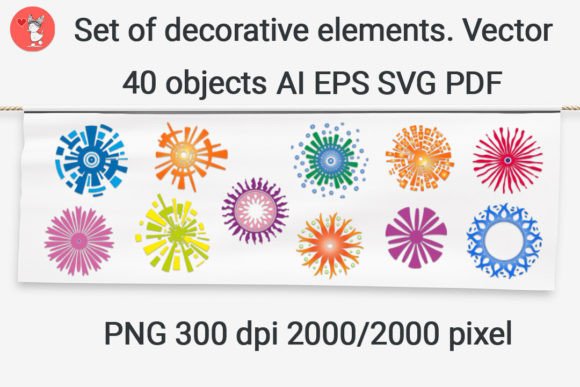
Upon reviewing the Decorative Elements within this set, the visual personality feels crisp and adaptable. These are not heavy, blocky shapes; they possess a lightness that suggests they would work beautifully as accents rather than dominant focal points. For an Etsy seller or a small shop owner looking to elevate a basic product without overwhelming it, this mood is exactly what you need. The layout of the individual elements suggests they are designed to be mixed and matched, creating custom compositions that feel organic rather than rigid.
However, the true test lies in how these Graphics perform when converted into an embroidery file. In my experience, intricate vector lines can sometimes result in excessive running stitch counts or fragile outlines that break easily on stretchy fabrics. The key to this set's success will be how well the digitizer has balanced the fill stitch areas with the outline details. If the design relies too heavily on thin lines without adequate support, it may struggle on textured materials like canvas or denim.
A Real-World Scenario: The Custom Tote Bag Project
To truly evaluate the utility of Set of Decorative Elements. Vector, let’s imagine a specific project: a boutique client wants to launch a line of eco-friendly tote bags featuring a whimsical, nature-inspired motif. They want something that screams "handmade" but maintains a professional finish. I decide to use three of the decorative elements—a floral corner, a geometric border, and a central abstract shape—to create a cohesive tote bag design.
In this scenario, the stitch density becomes the primary concern. Tote bags are often made from cotton canvas, which has a visible weave. If the machine embroidery design is too dense, the fabric might pucker, ruining the drape of the bag. Conversely, if the thread colors lack contrast against the natural beige canvas, the design will disappear. Using the Set of Decorative Elements. Vector here requires careful selection of stabilizers. A cutaway stabilizer would likely be necessary to prevent the heavier elements from distorting the fabric during the high-speed stitching process.
When I visualize the finished product, the customer reaction hinges on clarity. Will the decorative accents look sharp, or will they appear muddy? The advantage of this vector-based source is that the lines are clean, which usually translates to precise satin stitch borders if digitized correctly. For a personalized gift or a holiday embroidery item, this level of definition builds trust. Customers buying from a craft business expect a polished look, and any fuzziness in the edges can make a handmade product feel amateurish.
Navigating Fabric Challenges and Limitations
While the potential is high, there are specific situations where Set of Decorative Elements. Vector must be used with caution. Small hoop sizes present an immediate challenge. Some of the more detailed elements in this collection might lose their impact if scaled down too aggressively for a cap or a small embroidered patch. On curved surfaces like hats, the tension changes, and complex corners in the design can pull out of shape. I always advise testing these designs on scrap fabric first to see how the curves behave under tension.
Textured fabrics also demand attention. If you are applying these elements to a sweatshirt embroidery project or a thick knit, the nap of the fabric can obscure fine details. The stitch density needs to be adjusted to ensure the design sits on top of the fibers rather than sinking into them. Similarly, dark fabrics require different thread colors and potentially a backing layer to ensure visibility. Without proper planning, the visual appeal of the design can be lost, reducing the perceived value of the finished product.
Furthermore, products that undergo frequent washing, such as kitchen towels or aprons, require robust construction. Delicate running stitch details might fray over time if not reinforced. For a baby embroidery project, safety is paramount; loose threads or overly dense stitching that irritates sensitive skin should be avoided. Always inspect small details after the initial test run to ensure no stray threads remain.
Practical Designer Notes for Success
Before committing to a large production run or listing items for sale, follow these practical steps to maximize the potential of Set of Decorative Elements. Vector:
- Test on Scrap Fabric: Never skip this step. Stitch a sample on the exact material you plan to use to check for puckering and thread tension.
- Check Thread Contrast: Compare your chosen thread colors against both light and dark fabric backgrounds. What works on white may vanish on navy blue.
- Review Stitch Density: Ensure the fill stitch isn't too tight, which causes fabric distortion, or too loose, which leads to holes.
- Confirm Hoop Size: Verify that the design fits comfortably within your machine's hoop size without needing awkward re-hooping that can misalign the pattern.
- Use Proper Stabilizer: Select a stabilizer appropriate for the fabric weight and stitch type to ensure a flat, professional finish.
- Inspect Small Details: Zoom in on the finished sample to check for skipped stitches or tangled threads in the intricate corners.
- Test Black and White Mockups: Create a printable mockup in grayscale to see if the design holds up without color reliance.
- Verify Licensing: Confirm that your license allows for commercial embroidery and selling finished products before launching your small shop product line.
Final Thoughts on Commercial Viability
The Set of Decorative Elements. Vector offers a strong foundation for creative entrepreneurs looking to expand their catalog. Whether you are creating custom apparel, wedding gifts, or nursery decor, the flexibility of having forty unique elements allows for endless combinations. However, the responsibility lies with the designer to adapt these assets to the physical realities of embroidery.
By understanding the limitations of different fabrics and the nuances of digitizing vector art, you can transform these simple design assets into high-value, professional-grade items. The difference between a generic craft fair product and a sought-after boutique item often comes down to these technical details. With careful planning and a focus on quality execution, this set can become a staple in your digital product library, driving engagement and sales for your brand.